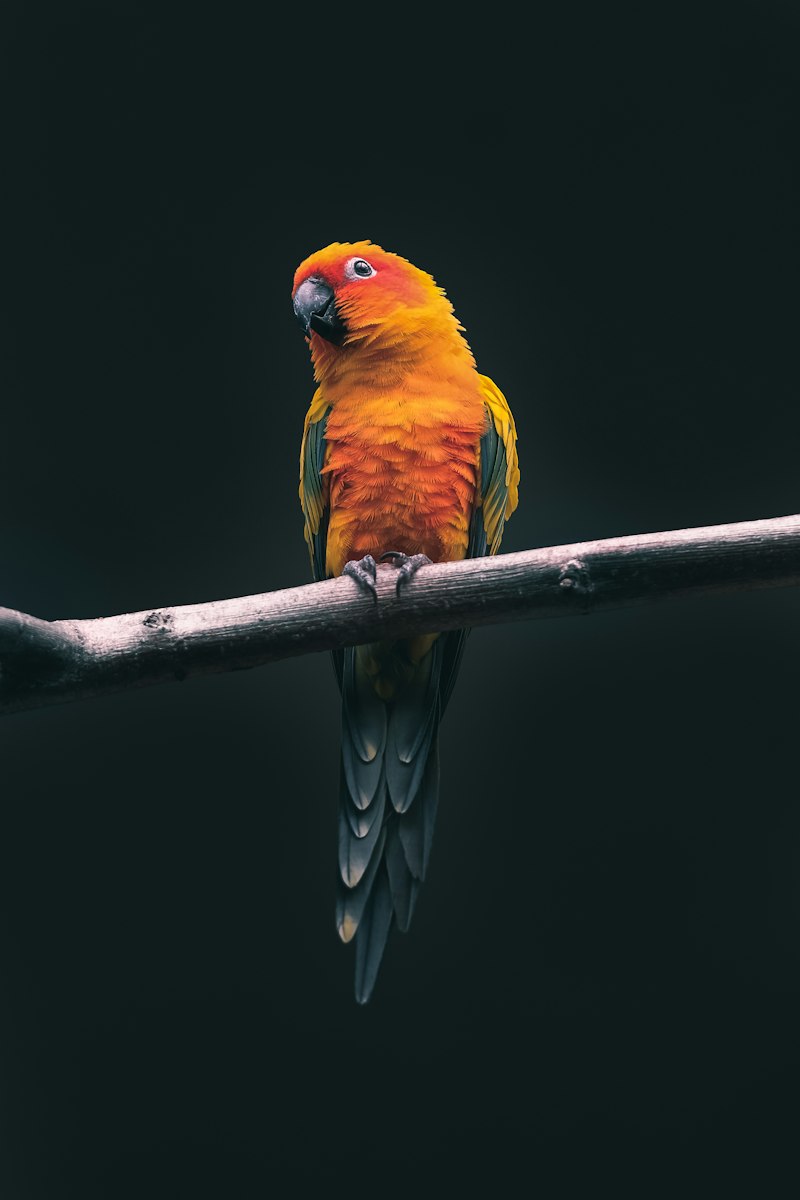
Known from only two museum specimens, the New Caledonian Owlet-nightjar remains one of the world’s most mysterious lost nocturnal birds.
The New Caledonian Owlet-nightjar (*Aegotheles savesi*) is widely considered one of the rarest, most enigmatic birds in modern ornithology. Endemic exclusively to the South Pacific island of New Caledonia, this nocturnal species occupies a mysterious place in wildlife research: it is known to science from only two physical specimens, collected over a century apart.
Morphological Uniqueness and Cryptic Behavior
Owlet-nightjars form an evolutionary bridge between true owls and nightjars. Possessing large forward-facing eyes surrounded by sensory facial bristles, short rounded wings, and long legs, *Aegotheles savesi* is noticeably larger than all other living owlet-nightjar species.
Biologists speculate that its unusually long legs and reduced wing muscularity indicate a terrestrial or semi-terrestrial lifestyle, foraging along forest floors for large invertebrates, beetles, and nocturnal insects. Its cryptic grey-brown vermiculated plumage allows it to roost undetected inside hollow tree trunks during daylight hours. Discover more about Pacific avian biodiversity at [Wikipedia's Owlet-nightjar Archive](https://en.wikipedia.org/wiki/New_Caledonian_owlet-nightjar).
The Lost Decades: Rediscovery and Mystery
The first specimen of the New Caledonian Owlet-nightjar was collected in 1880 when a bird flew into a bedroom window in the village of Tonghoué. For over 115 years, no further verified records existed, leading many naturalists to presume the bird was extinct.
However, in 1998, an expedition led by British field ornithologists reported a fleeting sighting of a large owlet-nightjar foraging in humid riverine rainforest in the valley of the Rivière Ni. Audio recordings of unknown nocturnal whistles and chattering calls continue to fuel hope that small remnant populations survive hidden deep in rugged, inaccessible mountain forests.
Conservation Priorities in Pacific Island Rainforests
The species is currently classified as Critically Endangered (Possibly Extinct) by the [IUCN Red List](https://www.iucnredlist.org). Introduced mammalian predators—such as feral cats, black rats, and wild pigs—pose severe threats to ground-nesting island birds.
Conservation groups such as the [World Wildlife Fund](https://www.worldwildlife.org) are conducting bio-acoustic autonomous monitoring across New Caledonia's rainforest canopy to locate roosting territories. Protecting these ancient forests is vital to preserving rare nocturnal species like the New Caledonian Owlet-nightjar and its avian relatives, including the nocturnal [Great Horned Owl](/articles/the-great-horned-owl-phantom-of-the-night-sky).
More Like This
 Owls
OwlsThe Great Horned Owl: Phantom of the Night Sky
One of North America's most powerful nocturnal predators rules the darkness with silent wings, razor-sharp talons, and golden eyes adapted to dim light.
 Raptors
Peregrine Falcon: Fastest Creature on Earth
Reaching dive speeds exceeding 320 km/h (200 mph), the Peregrine Falcon is a master of aerial velocity and high-altitude hunting precision.
 Seabirds
Atlantic Puffin: The Clown of the Ocean Cliffs
With bright orange bills and impressive diving capabilities, Atlantic Puffins spend months at sea before returning to rocky island cliffs to nest.
0 Comments