One of North America's most powerful predators rules the darkness with silent wings and golden eyes that see what we cannot.
The Great Horned Owl (Bubo virginianus) is one of evolution's finest nocturnal hunters. With a wingspan stretching up to 1.5 meters and eyes that gather light like headlamps, this magnificent bird has captivated humans for centuries.
Eyes Built for Darkness
Unlike human eyes, the Great Horned Owl's eyes are fixed in their sockets. To compensate, owls can rotate their heads up to 270 degrees, giving them an almost complete field of vision without moving their bodies. Their retinas are packed with rod cells, making them extraordinarily sensitive to dim light.
A Great Horned Owl can spot a mouse from over 150 meters away in near-total darkness — roughly equivalent to detecting a candle flame from half a kilometre.
Silent Wings, Deadly Precision
The leading edges of an owl's flight feathers are serrated like a comb, breaking turbulence into smaller currents. The result is near-silent flight — crucial for both surprise attacks and for hearing prey while airborne.
Their talons exert a grip force of roughly 300 pounds per square inch — strong enough to crush the spine of a hare in a single strike. They hunt everything from mice and rabbits to skunks and other birds of prey.
A Year-Round Presence
Unlike many raptors, Great Horned Owls do not migrate. They are year-round residents, often nesting in the abandoned stick nests of hawks, crows, or herons. Their deep, resonant hooting begins in winter, making them one of the earliest nesters in North America.
More Like This
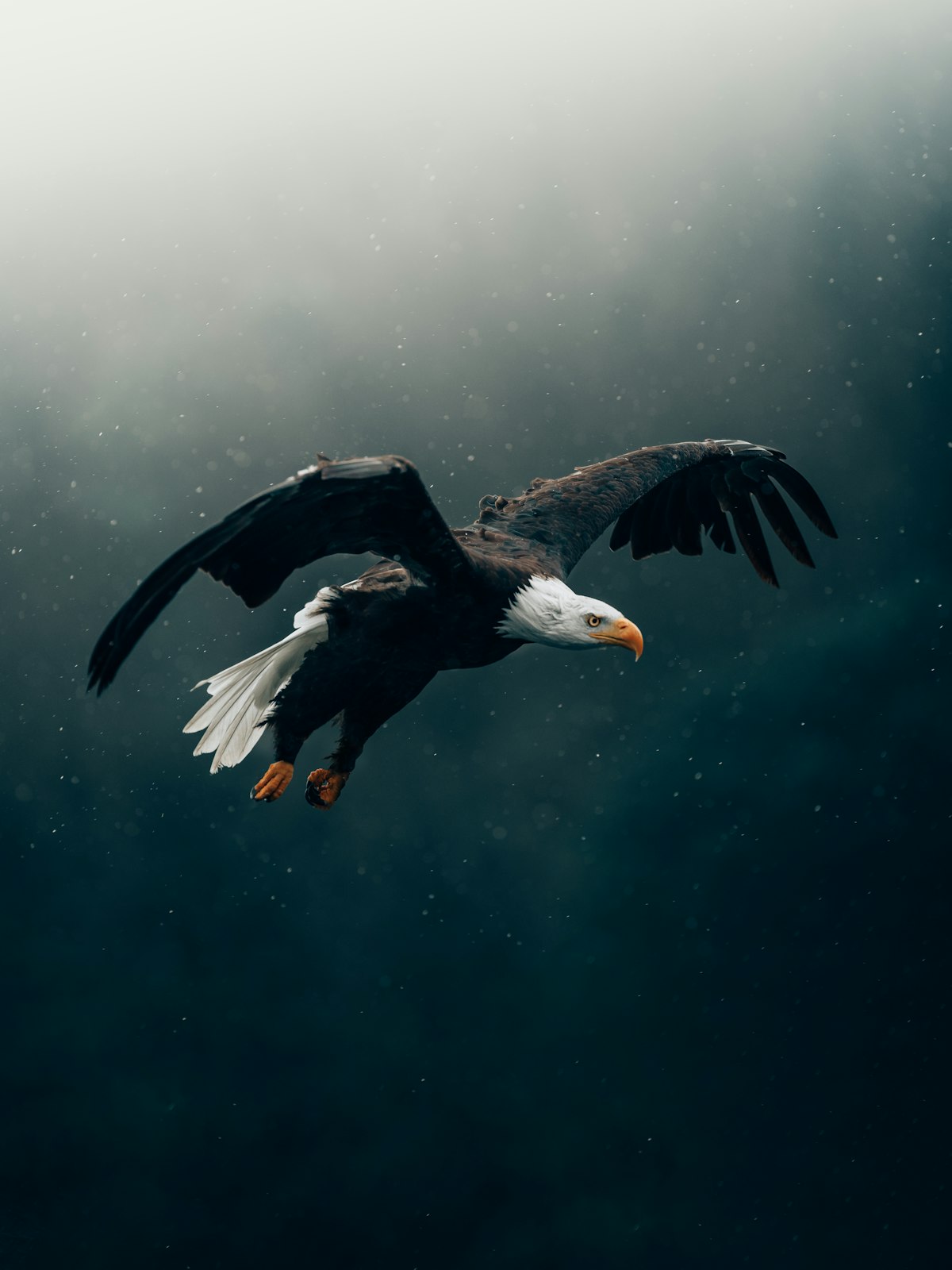 Owls
OwlsThe Great Horned Owl: Phantom of the Night Sky
One of North America's most powerful nocturnal predators rules the darkness with silent wings, razor-sharp talons, and golden eyes adapted to dim light.
 Raptors
Peregrine Falcon: Fastest Creature on Earth
Reaching dive speeds exceeding 320 km/h (200 mph), the Peregrine Falcon is a master of aerial velocity and high-altitude hunting precision.
 Seabirds
Atlantic Puffin: The Clown of the Ocean Cliffs
With bright orange bills and impressive diving capabilities, Atlantic Puffins spend months at sea before returning to rocky island cliffs to nest.
0 Comments