
How America's iconic sea eagle rebounded from near-extinction to populate rivers, lakes, and coastal bays across North America.
The Bald Eagle (*Haliaeetus leucocephalus*) stands as one of modern wildlife conservation's greatest victory stories. Once pushed to the very brink of extinction across the contiguous United States, America's national symbol has staged a triumphant ecological comeback over the past half-century.
Morphological Power and Nest Architecture
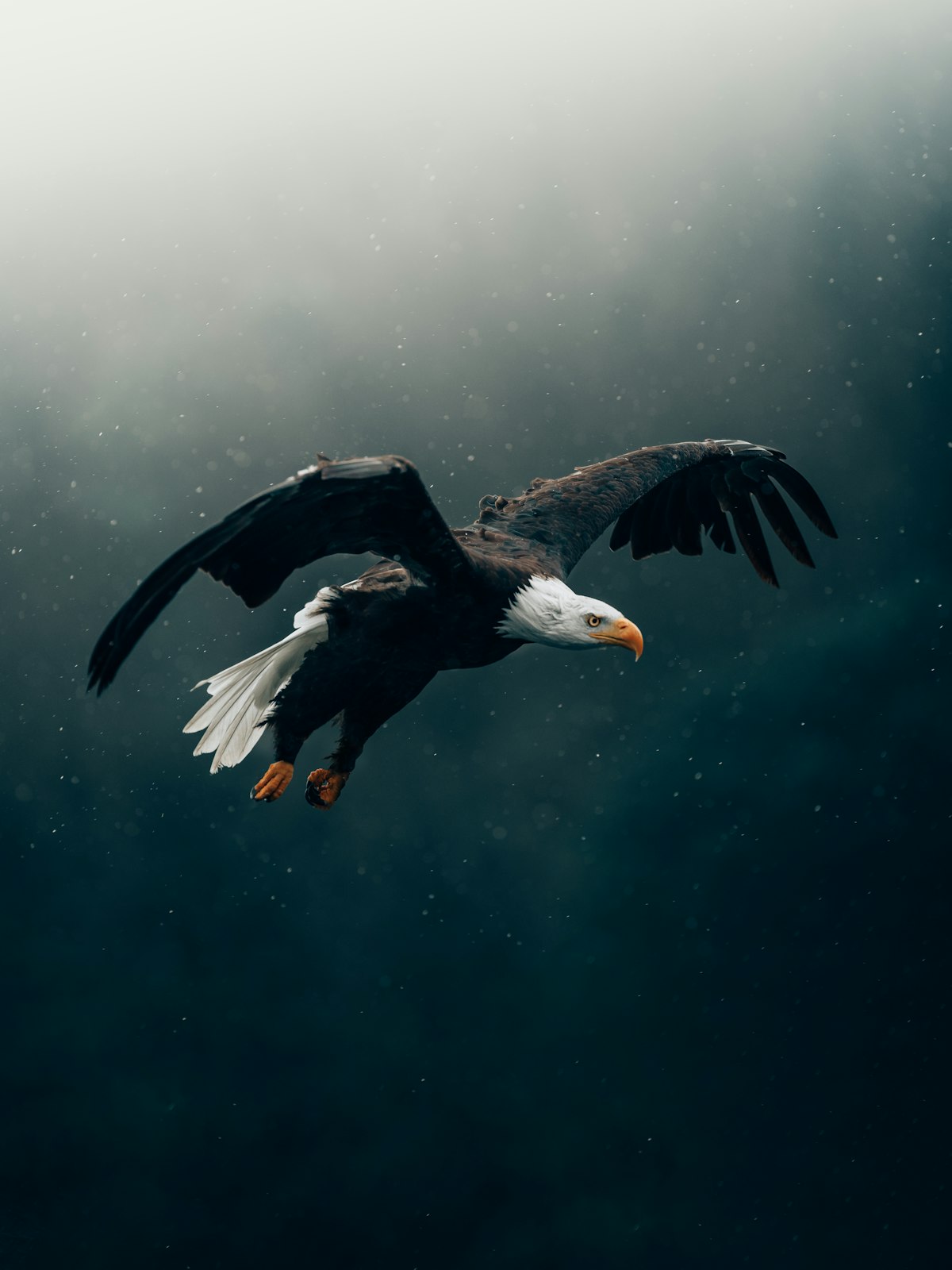
Distinguished by its snowy-white head, deep brown body, and massive yellow beak, the Bald Eagle is a sea eagle adapted to aquatic ecosystems. Females are significantly larger than males, boasting wingspans reaching up to 2.3 metres (7.5 feet).
Bald eagles build the largest tree nests of any bird species on planet Earth. These massive structures, called eyries, are constructed from thick sticks and lined with moss and grass. Because breeding pairs return to the same nest year after year, adding fresh material each season, eyries can reach staggering dimensions—some measuring over 3 metres (10 feet) wide, 6 metres (20 feet) deep, and weighing more than two metric tons.
Near-Collapse and Ecological Factors
In the mid-20th century, habitat loss, illegal shooting, and agricultural pesticide contamination combined to decimate eagle populations. Like the [Peregrine Falcon](/articles/peregrine-falcon-fastest-creature-on-earth), eagles ingested fish contaminated with DDT, which weakened eggshells so severely that parent eagles crushed their own unhatched eggs during nesting.
By 1963, fewer than 487 nesting pairs of Bald Eagles remained in the lower 48 US states, prompting immediate federal protection under precursor legislation to the Endangered Species Act. For historical species data, review [Wikipedia's Bald Eagle Overview](https://en.wikipedia.org/wiki/Bald_eagle).
Legislative Protection and Modern Status
The turning point occurred in 1972 with the federal ban on agricultural DDT, followed by nationwide nest monitoring, habitat protection, and captive reintroduction initiatives coordinated by agencies and global conservation partners like the [World Wildlife Fund](https://www.worldwildlife.org).
Decades of dedicated stewardship bore fruit: by 2007, the Bald Eagle population had recovered so dramatically that the species was officially removed from the Federal Endangered Species List. Today, an estimated 316,000 individual Bald Eagles soar across North America, re-classified as Least Concern by the [IUCN Red List](https://www.iucnredlist.org).
More Like This
 Owls
OwlsThe Great Horned Owl: Phantom of the Night Sky
One of North America's most powerful nocturnal predators rules the darkness with silent wings, razor-sharp talons, and golden eyes adapted to dim light.
 Raptors
Peregrine Falcon: Fastest Creature on Earth
Reaching dive speeds exceeding 320 km/h (200 mph), the Peregrine Falcon is a master of aerial velocity and high-altitude hunting precision.
 Seabirds
Atlantic Puffin: The Clown of the Ocean Cliffs
With bright orange bills and impressive diving capabilities, Atlantic Puffins spend months at sea before returning to rocky island cliffs to nest.
0 Comments